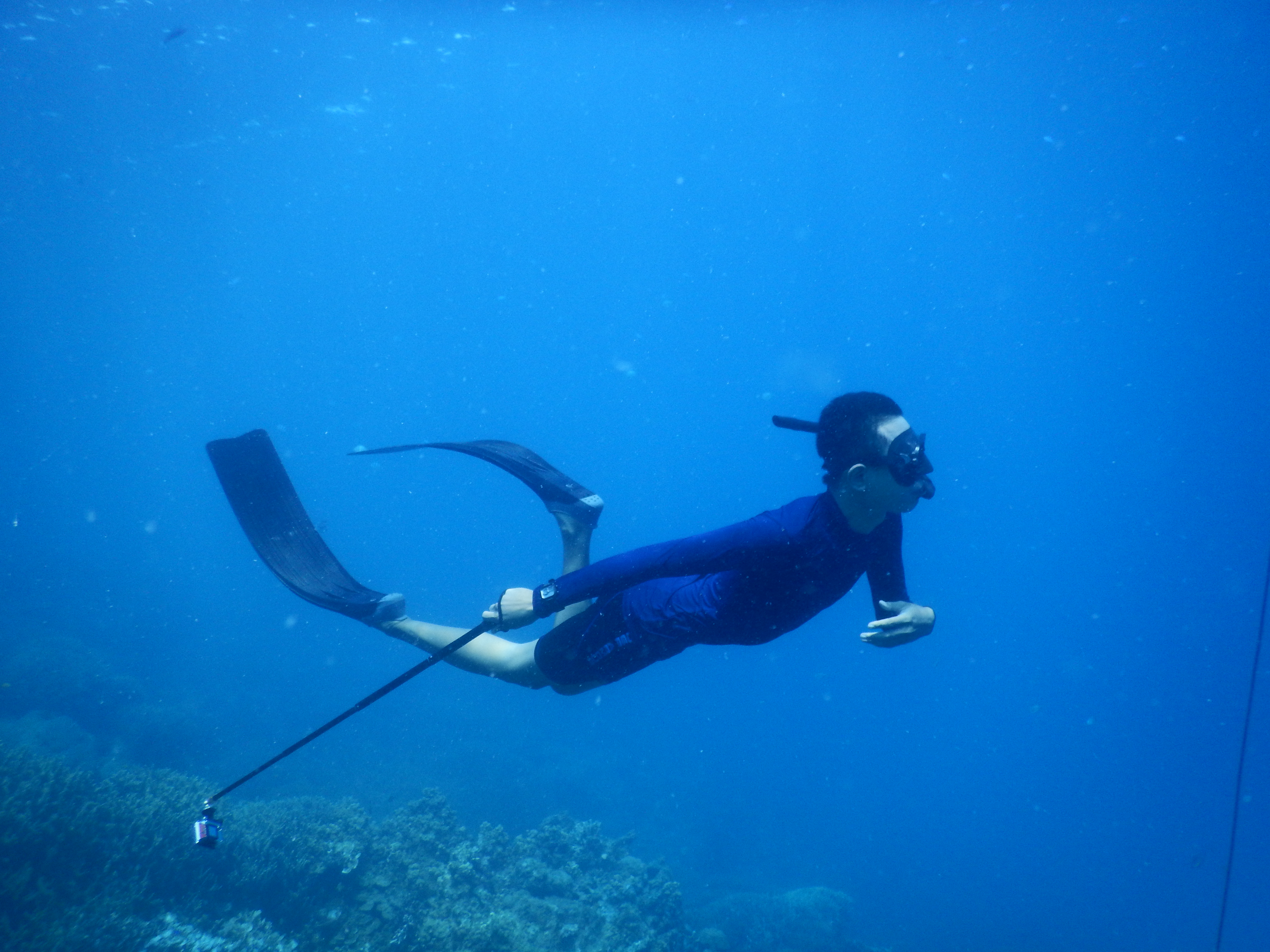
In the discipline of freediving, there is a widely accepted physiological truth: the human body is capable of holding its breath far longer than the human mind will allow.
When a healthy, trained diver prematurely terminates a breath-hold, it is rarely due to a genuine lack of oxygen (hypoxia). Instead, the termination is almost always a psychological surrender. The diver hits a mental wall, experiences a surge of anxiety, and succumbs to the overwhelming, panic-inducing urge to breathe.
While much of apnea training focuses on physical adaptation—stretching the intercostal muscles, optimizing the mammalian dive reflex, and building red blood cell counts—the most significant breakthroughs happen in the mind. To push past a plateau and extend your bottom time safely, you must understand the neuroscience of the panic response and apply structured psychological frameworks to override it.
Here is the science-backed guide to the psychology of apnea, the mechanics of the fear response, and how to train your brain to remain calm under hypercapnic stress.
The Neuroscience of Panic: The False Suffocation Alarm
To conquer the panic response, a diver must first understand that the severe discomfort experienced during the latter half of a breath-hold is a biological lie. Your brain is reacting to a false alarm.
When you hold your breath, your cells continue to metabolize energy, consuming oxygen and producing carbon dioxide (CO2) as a byproduct. Because the airway is closed, this CO2 accumulates in the bloodstream. Specialized sensors in the brainstem (specifically in the medulla oblongata) known as central chemoreceptors are highly sensitive to the pH changes caused by this rising CO2.
When CO2 levels cross a specific physiological threshold, these chemoreceptors trigger an intense survival mechanism. They send distress signals that manifest physically as involuntary diaphragm contractions and psychologically as severe anxiety.
The Role of the Amygdala
Simultaneously, the amygdala—the brain's primary fear and emotion-processing center—detects this physiological distress. The amygdala does not distinguish between different types of existential threats; it simply recognizes that homeostasis is broken. It triggers the sympathetic nervous system (the "fight-or-flight" response), releasing adrenaline and cortisol into the bloodstream.
This chemical dump is catastrophic for a freediver. Adrenaline instantly spikes the heart rate, forcing the body to burn through its remaining oxygen reserves at an accelerated pace.
The Psychological Disconnect
The panic response is built on a misunderstanding between the brainstem and the conscious mind. The brainstem triggers panic because CO2 is high, but the conscious mind misinterprets this panic as a signal that oxygen is empty. In reality, at the exact moment the first diaphragm contraction hits and panic sets in, the average diver still has near-maximum oxygen saturation (often above 95% SpO2).
Overcoming the panic response requires cognitive reappraisal: the conscious recognition that the pain of CO2 accumulation is not dangerous, but simply a temporary environmental stressor that can be managed.
The Two Frameworks of Apnea Psychology: Association vs. Dissociation
Sports psychologists generally divide coping mechanisms for endurance athletes into two primary categories: Association and Dissociation. Elite freedivers utilize both methods, systematically switching between them as the breath-hold progresses from the "Comfort Phase" to the "Struggle Phase."
1. Dissociation (The Distraction Technique)
Dissociation involves directing conscious attention completely away from the physical sensations of the body. The goal is to occupy the mind with external or highly imaginative internal stimuli, preventing the brain from focusing on the rising CO2 levels.
This technique is highly effective during the Comfort Phase (the period before the first involuntary contraction). By keeping the mind peacefully distracted, the diver prevents anticipatory anxiety, maintaining a low resting heart rate.
Mental Walkthroughs: A diver might mentally visualize walking through their childhood home, opening every door, and recalling the specific details of every room.
Complex Counting: Counting backward from 1,000 in increments of 7 requires enough cognitive load to distract the brain from minor physical discomfort, but not enough to cause mental fatigue.
Audio Focus: Listening to the ambient sounds of the ocean or the sweeping tones of a relaxation track.
2. Association (The Acceptance Technique)
As CO2 levels reach their peak and diaphragm contractions become violent, Dissociation becomes impossible. The physical stimuli are simply too loud for the brain to ignore. At this threshold, attempting to distract oneself will cause psychological fracturing and immediate panic.
During the Struggle Phase, divers must switch to Association. Association requires focusing intently on the physical sensations of the body, analyzing them objectively without assigning emotional weight to them.
- Objective Observation: Instead of thinking, "This hurts, I am going to pass out," the diver shifts the internal monologue to clinical observation: "My diaphragm is contracting. My chest feels warm. My heart rate is steady."
- Micro-Focus: Focusing entirely on relaxing a single, tiny muscle group (such as the muscles behind the eyes or the tip of the tongue) while the rest of the respiratory system spasms.
By accepting the physical discomfort rather than fighting it, the diver prevents the amygdala from triggering a full sympathetic nervous system response.
Actionable Techniques to Suppress the Fight-or-Flight Response
Understanding the neuroscience is only the first step. To permanently extend a breath-hold, divers must actively train their psychological resilience on dry land. Here are three structured techniques utilized by competitive freedivers to manage hypercapnic stress.
1. Progressive Muscle Relaxation (The Advanced Body Scan)
Muscular tension is the physical manifestation of psychological panic. When the brain senses suffocation, it instinctively tightens the jaw, the neck, and the shoulders. This tension consumes massive amounts of oxygen and generates excess CO2.
To combat this, divers must practice the "Body Scan." During the struggle phase, the diver systematically directs their attention to specific muscle groups, actively commanding them to release.
- Step 1: Isolate the jaw. Let the lower jaw hang slightly slack.
- Step 2: Isolate the shoulders. Command them to drop away from the ears.
- Step 3: Isolate the hands and feet. Ensure the fingers and toes are uncurled and floating freely.
By actively forcing the skeletal muscles to remain completely relaxed during severe hypercapnic stress, the diver sends a powerful biofeedback loop back to the brain, essentially telling the amygdala: "The body is completely relaxed; therefore, we are not in danger."
2. Cognitive Reframing and Mantras
The internal dialogue during a breath-hold dictates the physiological outcome. Negative self-talk (e.g., "I can't do this," "I need air") accelerates the heart rate.
Cognitive reframing replaces these automatic negative thoughts with pre-programmed, rational mantras. These mantras should be anchored in physiological facts to remind the brain that the situation is safe.
"I have plenty of oxygen; this is just CO2."
"Contractions mean the mammalian dive reflex is working."
"My body is adapting and becoming stronger."
Repeating a factual, grounding mantra during the peak of the struggle phase provides the conscious mind with an anchor, preventing it from being swept away by the physical panic of the spasms.
3. Exposure Therapy via CO2 Tables
Panic is often a fear of the unknown. If a diver only experiences high CO2 while spearfishing at 20 meters, the anxiety will be overwhelming because the stakes are incredibly high.
The most effective psychological tool for overcoming apnea panic is systematic desensitization through dry-land CO2 Tables. By intentionally exposing the brain to high CO2 levels while lying safely on a yoga mat, the diver learns what the panic feels like in a controlled environment. Over time, the brain becomes desensitized to the alarm bells, recognizing that high CO2 does not equal imminent death.
The "Stopwatch Trap": Why Visual Stimuli Induces Anxiety
There is a critical psychological error that almost all intermediate divers make during their dry training: they stare at a stopwatch.
When a diver watches the seconds tick away on a phone screen or a digital watch, they are subjecting themselves to intense visual stress. The brain fixates on an arbitrary numerical goal (e.g., "I must reach three minutes"). As the physical discomfort grows, the diver continuously checks the clock, realizing they still have 45 seconds remaining.
This creates a massive psychological conflict. The brain calculates the current level of pain, projects it 45 seconds into the future, determines that the future pain will be intolerable, and triggers a preemptive panic attack. The heart rate spikes, the diver bails out, and the training session fails.
To maintain a pure parasympathetic state (rest and digest), visual stimuli must be completely eliminated.
The Aegean Breath Solution: Eyes-Free, Audio-Guided Training
The psychology of apnea demands total internal focus. Visual tracking pulls the diver out of that focus and introduces performance anxiety. This specific psychological barrier is the foundation upon which Aegean Breath was developed.
To train the mind effectively, a diver must be able to close their eyes, eliminate all visual stressors, and surrender to the experience. Aegean Breath acts as a digital training partner designed to keep the diver in a parasympathetic state.
"Alfie" Audio Guide: Instead of checking a screen, Aegean Breath utilizes a built-in voice assistant. Alfie guides the diver through the entire breathe-up process, announces the start of the hold, and provides gentle, non-intrusive audio updates at custom intervals.
Haptic Feedback: For divers who prefer complete silence to achieve deep Dissociation, the app utilizes targeted haptic vibrations. The phone communicates the table intervals purely through touch, allowing the diver to keep their eyes closed and their mind perfectly still.
Algorithmic Progression: By utilizing a baseline test to automatically generate custom CO2 and O2 tables, Aegean Breath ensures the diver is never subjected to a table that is mathematically too difficult. This prevents the psychological burnout and frustration associated with repeatedly failing generic, overly aggressive tables.
To conquer the panic response, you must stop fighting your mind and start training it with the right tools. Remove the visual stress, close your eyes, and let the data guide your progression.
Related Articles
Stop staring at the stopwatch and start training your mind the way elite freedivers do.
Download Aegean Breath on Google PlayStart your 14-day free trial. Experience the psychological difference of true, eyes-free audio training, and watch your bottom times safely expand.
References & Further Reading
Guyton, A.C., & Hall, J.E. (2006). Textbook of Medical Physiology. Elsevier Saunders. (Details the mechanics of the medulla oblongata, central chemoreceptors, and the physiological trigger for the urge to breathe).
Schagatay, E. (2009). Predicting performance in competitive apnea diving. Journal of Applied Physiology. (A foundational study analyzing the correlation between psychological CO2 tolerance and maximum breath-hold duration).
Weinberg, R.S., & Gould, D. (2015). Foundations of Sport and Exercise Psychology. Human Kinetics. (Provides the clinical framework for Association vs. Dissociation techniques and cognitive reappraisal in endurance athletics).
Pelizzari, U., & Tovaglieri, S. (2001). Manual of Freediving: Underwater on a Single Breath. Idelson-Gnocchi. (Authoritative breakdown of the mental struggle phase and the necessity of muscular relaxation under hypercapnic stress).